


BioMaterial and BioTechnological Demos


Conductive leaves to show how sustainable waste streams can become conductive parts within working circuits which can then be biodegradable or compostable themselves.


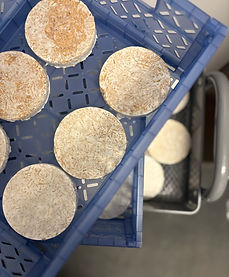

Students completed a hands on workshop making mycelium samples to better understand materiality and potential uses of similar sustianaible materials.
M.A.D.E
Samueli
Principal Investigator
Goals
To develop and study tools—including design lens cards, material explorations, and hands-on workshops—that support how high school students navigate complex design challenges and envision alternative futures.
This research investigates how these tools shape students’ thinking, approaches to design, and sense of agency when engaging with materials, technologies, and future-oriented design problems.
Project Overview
This project is part of the M.A.D.E. (Merging AI, Design & Engineering) collaboration between Chapman University, Samueli Academy, and Vans, supported through a Chapman Faculty Grant for Research, Scholarship & Creative Activities (FGRSC).
At its core, the project focuses on the development and integration of scaffolded tools—such as the FutureCraft / Critical Footwear Futures card deck, biomaterial explorations, and guided workshops—within a wearable design project. These tools are designed to support students in navigating design decisions, engaging with complexity, and exploring alternative possibilities for the future.
Tools + Scaffolding
A central focus of this work is the development of tools that support how students think through design—not just what they design.
These include:
-
FutureCraft / Critical Footwear Futures Cards
-
A card-based toolkit introducing alternative design lenses (e.g., sustainability, ethics, systems thinking, function, material practices)
-
-
Biomaterial Workshops + Hands-On Demos
-
Activities that provide tangible exposure to alternative materials and making processes
-
-
Guided Design Activities + Discussions
-
Structured prompts that support reflection on design decisions, trade-offs, and possibilities
-
Together, these tools aim to:
-
support navigation of complex, interdisciplinary design spaces
-
expand how students frame problems and possibilities
-
provide tangible entry points into abstract concepts
-
encourage exploration of alternative futures
Project Context (M.A.D.E. Experience)
Students engage with these tools within a multi-week wearable design project:
-
Designing future-oriented footwear concepts
-
Exploring materials, sustainability, and emerging technologies (including AI)
-
Working with industry mentors from Vans
-
Participating in scaffolded workshops and guided activities
The tools are embedded throughout the project—not as add-ons, but as integral supports for how students approach their work.
Partnership + Environment
-
Samueli Academy (Education Partner) — STEAM-focused design pathway
-
Vans (Industry Mentors) — real-world design perspectives
-
Chapman University (PI Research) + Academic Collaborators at Simon Fraser University (Support on Tool Development, Data Analysis) — scaffolding, workshops, and study design
This collaboration creates a setting where tools can be developed, implemented, and studied within an authentic learning environment.
Methods
-
Pre- and post-project surveys (capturing shifts in student perspectives)
-
Observations of workshops and in-class activities
-
Analysis of student design artifacts and process work
-
Focus group with industry mentors (Vans)
-
Interview with course instructor (Patricia Vining)
-
Focus groups with educators across Samueli Academy (e.g., Computer Science/Engineering, Biology/Botany), exploring how the card-based tools support interdisciplinary thinking and engagement with complex, “wicked” problems
Data is currently being analyzed using thematic and comparative approaches to understand how students and educators engage with the tools, how interdisciplinary connections are made, and how perspectives evolve through the project.
Outcomes + Insights
-
Forthcoming
Status + Ongoing Work
This project is currently in progress, with data collection and analysis ongoing.
Ongoing work includes:
-
refinement of the FutureCraft card deck and associated workshops
-
development of biomaterial-focused learning kits
-
preparation of publications and conference submissions
Publications + Dissemination
-
Publications Forthcoming
-
Free Access to Critical Footwear Futures Cards